Mindfulness is the key to experiencing Life. The Past does not exist. The future has not arrived yet. All we have is ” Present”. Be here and now. Don’t live life on auto pilot mode. Practice Mindfulness . Connect your Body, Mind & Soul and experience life.
Understand Mindfulness via Unmindfulness
To understand Mindfulness, let us first understand what is unmindfulness.
Have you ever experienced this ?
- You are going out of station. You have sat in the car. Suddenly, you start doubting whether you have locked door or not
- You have come out of shower and you are not sure whether you shampooed your hair or not
- You have left house without your car key or mobile phone
These are just a few every day examples of unmindfulness.
Being unmindful means being not fully attentive or aware of one’s actions , surroundings & people around.
Unmindfulness has become very common now-a-days. We drive on auto pilot, walk down the street looking at mobile phone, drink coffee while working, day dream in a meeting & above all, keep dwelling on the past or worrying about future.
Negative effects of Unmindfulness
Unmindfulness significantly impairs our efficiency, physical & mental health & relationships. Some of the key negative effects of unmindfulness are :
- Increases Anxiety & Stress
- Causes Mental Fatigue
- Increases chances of Mistakes in task at hand
- Increases chances of Heart Disease, High Blood pressure
- Increases chances of misunderstandings & disconnections with loved ones causing relationship issues
- Missed moments of joy as unmindful persons fail to relish the simple pleasures of present moment
What is Mindfulness
Mindfulness is about being present in the moment. Which means being fully aware of
- Your thoughts & feelings at the moment – without being judgmental
- Your Body sensations at the moment
- Your present surroundings
- People around you presently
- The immediate task at hand
Awareness & Intentionality are two vital components of Mindfulness.
Benefits of Mindfulness
Mindfulness has significant benefits for our physical & mental health. Mindfulness is the key to experiencing Life. Some of the notable benefits are :
- Lowered Anxiety & stress
- Conservation of Energy
- Increased Emotional Regulation ( Mindfulness regulates Amygdala ( the part of Brain which processes emotions like Fear & Anger) by reducing its hyper activity to stress & improving connectivity with Pre frontal Cortex of brain. Mindfulness also shrinks Amygdala over a period of time , thereby reducing its hyper activity
- Improved cognitive function such as Focus, enhanced attention span & Neuroplasticity (Mindfulness enhances capabilities of Pre Frontal Cortex, the part of Brain responsible for functions such as Reasoning, Logical thinking & emotional regulation)
- Improved Sleep & Heart health
- Better relationships
How to be Mindful
The biggest roadblock in the path of mindfulness is the non stop thoughts and internal chatter in our mind. Being mindful would be easier, if we could control these thoughts & internal chatter . Here follows the step by step guide to practicing mindfulness.
Mindfulness through Breathing
This can be done by conscious , mindful breathing. Breathing is a great anchor. Conscious Breathing stops the wandering mind and brings us back to the present moment.
Conscious breathing switches the Nervous System from Sympathetic Mode ( Fight or Flight ) to Parasympathetic Mode ( Calm & Rest) . Whenever your mind starts wandering , pause & tell yourself “Let me have some deep breaths”. Take a few conscious, deep, diaphragmatic breaths. Feel the breath coming through your body. It will bring you back to the present moment.
Mindfulness through Body Scan
Perform a Body Scan from Head to Toe (Or Toe to Head). Pay attention to each part of your body gradually (Head, Face, Neck, Chest, Abdomen, Back, Shoulder , Arms, Wrist, Thigh, Leg, Ankle , Toes )
Relax muscles & nerves of each part as you scan it. You can do this by giving instruction to muscles to relax . e.g. While scanning your head, tell ” Relax muscles of Head.” Repeat the instruction 2-3 times & feel the muscles relaxing. Move to the next part . Continue slow, deep breathing all along. Move on to the next & so on.
Body Scan combined with deep breathing keeps you fully in the present moment. It will also make you feel lighter.
Mindfulness through Distancing from Thoughts
Sit still . Calm & Relaxed. Don’t react to your thoughts. Create a distance between you & your thoughts. Look at them as a third person. Think of all these unwanted thoughts as strangers knocking at your door. Don’t open the door. Don’t let them in. Tell them to go away. They will remain there for a while . Let them. Don’t pay attention to them. They will go away.
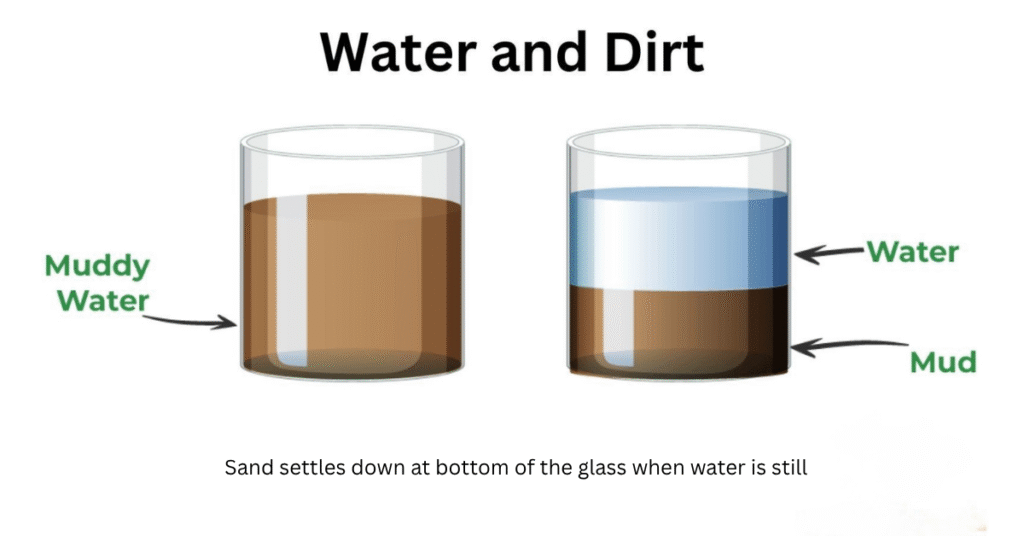
Imagine a clear glass of water with sand at the bottom. When you shake the glass, the water becomes muddy. When you hold the glass still, the sand settles down at the bottom , leaving the water clear.
Likewise, your thoughts make your mind muddy when you react to them. They settle down when you leave them to be as they are.
Admit their existence . But, do not react to them. Don’t give them a place to sit in your mind. They will float around for a while & go away.
Role of Nervous System in Mindfulness
Mindfulness connects the conscious mind with Autonomic Nervous System of our body.
Autonomic Nervous System regulates involuntary functions of our body such as Heart rate, Blood Pressure , respiration & Digestion.
Autonomic Nervous System has two primary , opposite sub-systems :
- Sympathetic Nervous System (SNS) : It is activated in stress situations. It triggers ” Fight or Flight ” response. SNS increases Heart rate, Blood pressure , blood level of stress hormones such as Cortisol, Adrenaline.
- Parasympathetic Nervous System (PNS) : It keeps the body in “Rest & Digest” mode. It Lowers Heart rate, Blood pressure, keeps the mind calm.
Mindfulness acts as a direct switch to shift the Nervous System from Sympathetic mode to Parasympathetic mode .
Deep, focused breathing & Body scan / relaxation stimulates the Vagus Nerve which activates PNS and brings the body & mind out of “Worry / Stress” loop .
Mindfulness exercise
You can now try this mindfulness exercise for a starter
- Sit in a chair
- Gently close your eyes
- Focus on your breath
- Visualise your Respiratory system ( Visualise Nose , Mouth, Throat, Wind pipe, Bronchial tubes , Lungs & Diaphragm)
- Take few deep breaths ( Consciously, being aware of Exhale & Inhale along with movement of Diaphragm with each exhale & Inhale)
- Start gradual Body scan from Head to Toe. Relax muscles of each part as you scan.
- When you reach toes, pause & feel the ground beneath.
- All along this exercise, thoughts will keep coming to your mind. Don’t react or respond. Think of them as strangers knocking on your door. Don’t open the door. They will go away after a while. You can even ask them to go away.
- Bring back attention to your breath & body. Feel the lightness.
- After a few minutes, open your eyes & see the surroundings calmly
Mindfulness in Daily Routine
You can practice Mindfulness in your daily routine
- Be mindful while Brushing teeth, Showering ( Put a sticky note “Be mindful” on bathroom mirror)
- Have a mindful breakfast ( Feel & savour each morsel)
- Drive mindfully ( Put sticky note on car dashboard)
- Before leaving office, do a mindful exercise to leave all work related thoughts at office. Go home with a lighter mind
- Have a mindful Dinner
- Spend mindful time with family
- At bedtime, take a few deep breaths, relax all muscles & nerves of body, welcome sleep with a light mind & light body
Conclusion
It takes practice to be mindful. Consistency is the key. You can try the following to adopt Mindfulness in your routine
- Put sticky notes such as “Be Here & Now” , ” Breath” , “Calm” at your desk , Bathroom mirror, Car dashboard etc
- Make it a habit to start every important task with a few deep breaths
- Run Body scans & relax muscles
Reset your nervous system by shifting from Sympathetic mode to parasympathetic mode. Look at your thoughts as a third person. Ask unwanted thoughts to go away.
Use analogies such as “thoughts as Clouds fading away” or “sand – water “.. or any other , whichever works for you.
Connect your Body, Mind & soul by being present , here & now.
It takes effort. But its worth it. Because, Mindfulness is the key to experiencing life